
The Privacy-First Brokerage: Using End-to-End Encryption to Protect Manufacturing IP
The Privacy-First Brokerage
The conversation about selling manufacturing data usually ends the same way. The plant manager gets interested in the revenue opportunity, the engineering team nods along, and then someone from legal or operations asks the question that stops everything: "If we sell this data, what's to prevent someone from reverse-engineering our process?"
It's a legitimate concern. Manufacturing data — cycle times, temperature profiles, tool paths, quality metrics, yield curves — isn't just operational telemetry. It's the encoded knowledge of decades of process optimization. A competitor with access to a precision manufacturer's sensor data could, in theory, reconstruct significant portions of the manufacturing process.
This is the core tension in industrial data brokerage: the data is valuable precisely because it contains real operational knowledge, but that's also why selling it feels dangerous. Assay's approach resolves this tension through end-to-end encryption that protects the data at every stage of the brokerage pipeline.
What Manufacturers Are Actually Afraid Of
The fears are specific and grounded:
Process reconstruction: CNC machining parameters — spindle speeds, feed rates, tool engagement angles, coolant flow rates — can reveal proprietary manufacturing techniques. A dataset of machining telemetry from a aerospace parts manufacturer effectively contains their manufacturing playbook.
Yield intelligence: Semiconductor fabs guard yield data obsessively. Knowing a competitor's defect rates, bin distributions, and yield improvement trajectories provides strategic intelligence worth millions.
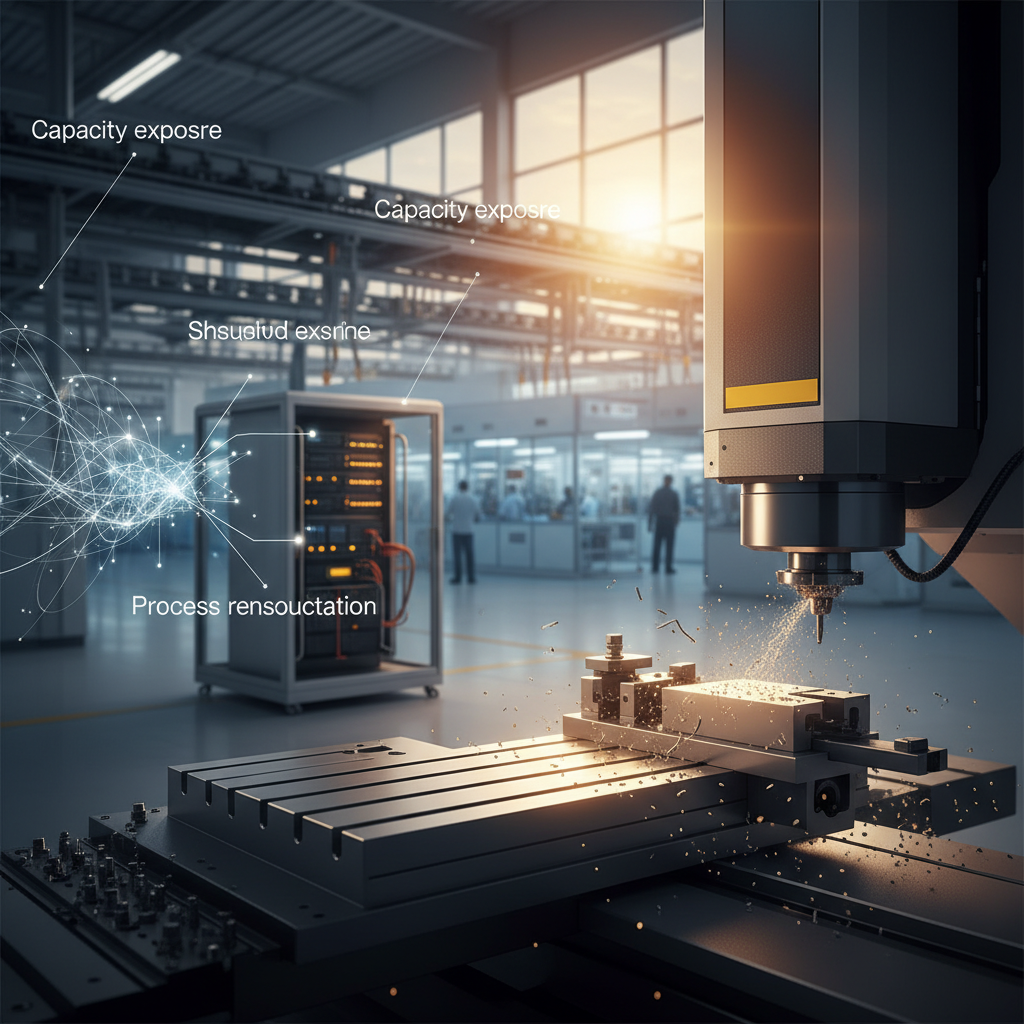
Capacity exposure: Operational data reveals production capacity, utilization rates, and throughput — information that competitors can use in pricing negotiations or that customers can use to pressure margins.
Supply chain inference: Equipment operational patterns can reveal supplier relationships, production schedules, and inventory strategies.
These aren't hypothetical risks. Industrial espionage through data acquisition is well-documented, and the growing market for industrial AI training data creates new channels for information leakage.

End-to-End Encryption: What It Actually Means
End-to-end encryption (E2EE) in the context of industrial data brokerage means that data is encrypted at the point of collection — on the sensor or edge device — and remains encrypted through every stage of the brokerage pipeline until it reaches the authorized end buyer.
Critically, this means the broker never sees the raw data. Assay facilitates the transaction, verifies provenance, and ensures delivery — but cannot read the contents of what it's brokering.
The technical implementation:
Encryption at the edge: Data is encrypted on the edge gateway using the buyer's public key before it leaves the facility's network. The encryption uses AES-256-GCM, the same standard used for classified government communications.
Key exchange: Buyer and seller establish a shared encryption context through a key exchange protocol (X25519 Diffie-Hellman). The broker facilitates the initial handshake but never possesses the session keys.
Transport encryption: Data in transit is additionally protected by TLS 1.3, providing defense-in-depth. Even if the outer transport layer were compromised, the inner E2EE layer remains intact.
At-rest encryption: Staged data awaiting buyer retrieval is stored in encrypted form. The storage infrastructure cannot decrypt it — only the buyer's private key can.

The Broker's Role Without Data Access
If the broker can't see the data, how can it add value? Several ways:
Metadata brokerage: Assay works with encrypted data but unencrypted metadata — sensor types, collection periods, data volume, sampling rates, equipment categories. This metadata is sufficient for buyers to evaluate whether a dataset meets their needs without exposing the actual values.
Schema verification: The data schema (column names, data types, units) can be shared separately from the values. A buyer knows they're getting vibration data in mm/s at 10kHz sampling rate without seeing the actual vibration readings.
Statistical summaries: Sellers can optionally provide aggregate statistics — means, distributions, completeness metrics — computed locally before encryption. These summaries help buyers assess quality without accessing raw data.
Provenance verification: DID-based sensor identity and calibration credentials (described in our previous post) operate independently of the data content. A buyer can verify that data came from a calibrated sensor of the claimed type without decrypting the readings.
Escrow and delivery: Assay manages the commercial transaction — payment, licensing terms, delivery confirmation — while the encrypted data passes through as an opaque payload.

Practical Considerations
E2EE in industrial data brokerage introduces trade-offs:
Data quality validation: The broker cannot independently verify data quality. This shifts quality assurance to the buyer (post-decryption) and to cryptographic provenance mechanisms. Buyers may require sample datasets or statistical proofs before committing to large purchases.
Processing limitations: Data that's encrypted end-to-end cannot be cleaned, transformed, or enriched by the broker. Sellers must deliver data in a format the buyer can use, or agree to apply transformations before encryption.
Regulatory compliance: Some regulations require data brokers to inspect data for compliance (e.g., ensuring personal data is properly anonymized). E2EE complicates this. Assay addresses it through contractual frameworks and pre-encryption compliance checks performed by the seller.
Performance: Encryption adds computational overhead at the edge. Modern hardware accelerated AES implementations handle this efficiently — the overhead is typically under 5% for streaming sensor data — but legacy edge devices may need upgrades.

The Market Impact
Privacy-first brokerage expands the addressable market significantly. Manufacturers who would never sell data through a traditional broker — because they can't accept the risk of exposure — will participate when they can verify that their data is encrypted from the moment it leaves their facility.
In Assay's experience, the adoption of E2EE protocols has opened conversations with manufacturers in aerospace, defense, semiconductor, and pharmaceutical sectors — industries where IP sensitivity previously made data monetization a non-starter.
The promise is simple: we broker the value of the information without ever compromising the physical security of the plant. The buyer gets the training data they need. The seller gets revenue from their operational data. And the raw operational details stay encrypted end-to-end, visible only to the authorized buyer who paid for them.