
Logistics and Supply Chain Data as AI Gold: What Makes Shipping, Routing, and Warehouse Data So Valuable
Logistics and Supply Chain Data as AI Gold
If manufacturing data is the new oil, logistics data is the new gold. It's harder to find, harder to extract, and worth more per gram. The AI applications it enables — route optimization, demand forecasting, warehouse automation, supply chain resilience — represent some of the largest commercial opportunities in industrial AI.
Why Logistics Data Commands Premium Prices
Several properties make logistics data exceptionally valuable for AI training:
Network Effects
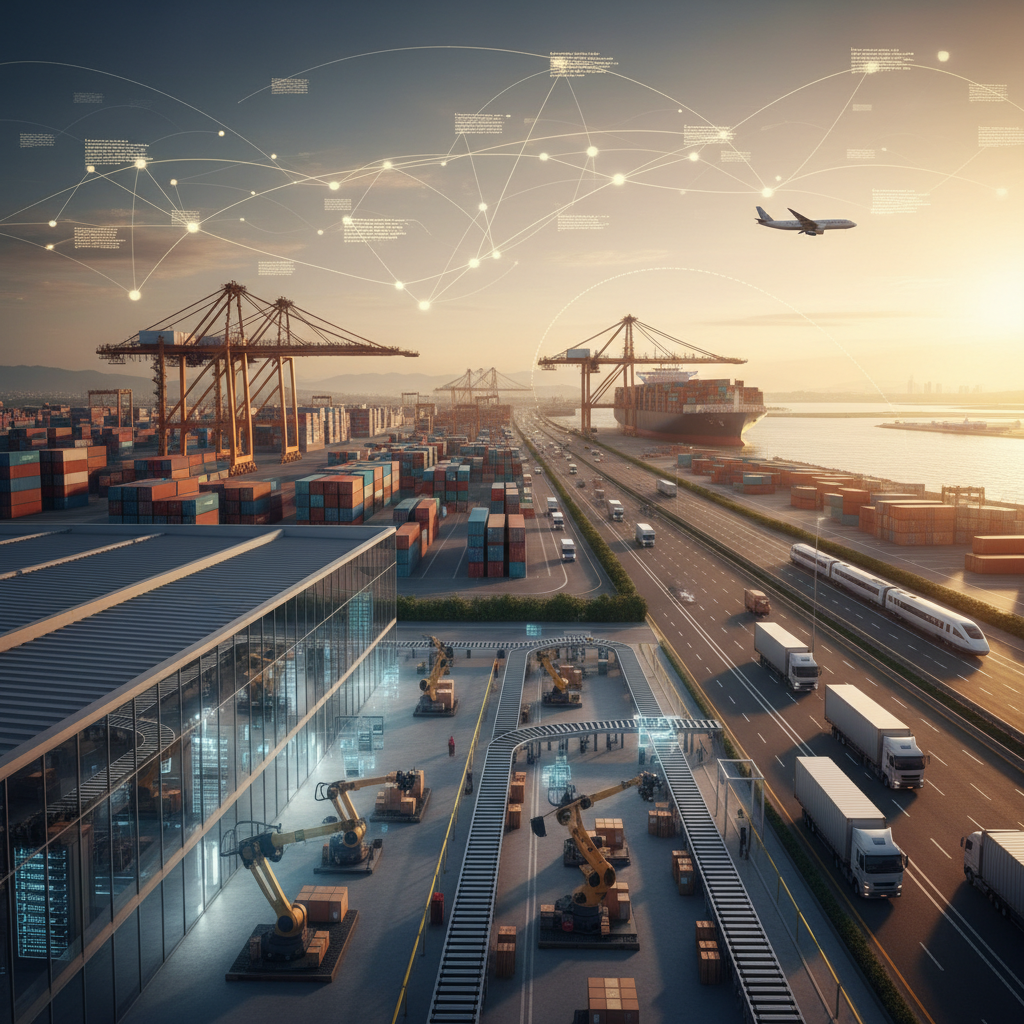
Logistics data is inherently networked. A single shipment touches origins, carriers, customs, warehouses, and final-mile delivery. Data that captures these interconnections — not just point observations — enables AI models that optimize across the entire network rather than individual nodes.
Temporal Complexity
Supply chains operate across multiple timescales simultaneously: real-time vehicle routing, daily warehouse operations, weekly demand patterns, seasonal cycles, and multi-year infrastructure planning. Training data that captures this multi-scale temporal structure is rare and valuable.
High Economic Impact
Even small efficiency improvements in logistics translate to enormous savings at scale. A 1% improvement in routing efficiency for a major shipping company can save hundreds of millions annually. AI companies know their customers will pay well for models that deliver these improvements, which supports premium pricing for the training data.
Fragmentation
Logistics data is scattered across thousands of companies, systems, and formats. No single entity has a complete picture. This fragmentation makes comprehensive datasets — ones that span multiple legs of the supply chain — extremely rare and difficult to assemble.

The Data Types
Key categories of logistics data sought for AI training:
Transportation telemetry: GPS tracks, speed profiles, fuel consumption, engine diagnostics, and driver behavior from trucks, ships, aircraft, and rail. Used for route optimization, predictive maintenance, and autonomous vehicle training.
Warehouse operations: Pick paths, inventory movements, packing operations, storage utilization, and labor productivity. Used for warehouse automation, layout optimization, and demand-driven inventory positioning.
Demand signals: Order patterns, seasonal trends, promotional impacts, and economic indicators. Used for demand forecasting and inventory optimization.
Port and terminal data: Vessel movements, container dwell times, berth utilization, crane operations, and customs clearance timelines. Used for port optimization and schedule prediction.
Last-mile delivery: Delivery attempts, success rates, customer availability patterns, package handling, and service time distributions. Used for delivery optimization and customer experience prediction.
Supply chain events: Disruptions, delays, reroutes, damage incidents, and capacity constraints. Used for supply chain resilience and risk modeling.

The Brokerage Challenge
Logistics data brokerage is harder than most industrial verticals due to:
Competitive Sensitivity
Logistics companies view their operational data as competitively sensitive. Shipping routes, customer volumes, pricing patterns, and network structures reveal strategic information. Convincing companies to share this data — even anonymized — requires significant trust.
Multi-Party Data
A complete supply chain record might involve data from a manufacturer, a freight forwarder, a trucking company, a port operator, a customs broker, and a last-mile carrier. Assembling a comprehensive dataset requires agreements with all parties.
Real-Time Value Decay
Logistics data loses value quickly. A routing dataset from last year reflects last year's road conditions, traffic patterns, and infrastructure. Fresh data commands a significant premium.
Standardization Gaps
Despite industry efforts (EDI, GS1, DCSA), logistics data formats remain wildly inconsistent. Different carriers use different tracking systems, different time zones, different units, and different definitions for common concepts like "delivered."

Market Structure
The logistics data brokerage market has distinct tiers:
Tier 1 — Platform aggregators: Large logistics platforms that aggregate data across their networks. They have the most comprehensive data but face the greatest competitive sensitivity concerns.
Tier 2 — Specialized data companies: Firms that focus on specific logistics data types — vessel tracking, freight rate benchmarking, port analytics. They offer deep expertise in narrow domains.
Tier 3 — Cross-chain assemblers: Brokers that stitch together data from multiple sources to create end-to-end supply chain datasets. This is the hardest but potentially most valuable role.

What AI Buyers Should Know
When purchasing logistics data for AI training:
- Insist on temporal metadata: Logistics data without accurate, synchronized timestamps is nearly useless
- Verify geographic coverage: A dataset that covers one region doesn't train models that work in another
- Check for survivorship bias: Logistics datasets often exclude failed routes, canceled shipments, and disrupted supply chains — exactly the scenarios where AI is most needed
- Assess network completeness: Data that captures only one leg of a supply chain limits model applicability

The Opportunity
The logistics industry's data fragmentation is the data broker's opportunity. No single logistics company can provide the breadth of data needed to train comprehensive AI models. Brokers who build the relationships, infrastructure, and trust to assemble cross-chain datasets fill a gap that the market cannot fill on its own.
The companies that crack logistics data brokerage won't just sell datasets. They'll become essential infrastructure for the AI-driven transformation of global supply chains.